










Waymo: A New Form of Transportation

Few technologies spark as much fascination—and fear—as the idea of a car driving
itself. For years, autonomous vehicles were treated as science fiction, something
imagined in futuristic movies rather than expected on real city streets. Yet today,
companies like Waymo are turning that fiction into reality, placing fully driverless taxis
into everyday traffic. As these vehicles quietly navigate busy intersections and crowded
neighborhoods, the question becomes impossible to ignore: are we witnessing the
future of transportation, or rushing into something we’re not ready for?
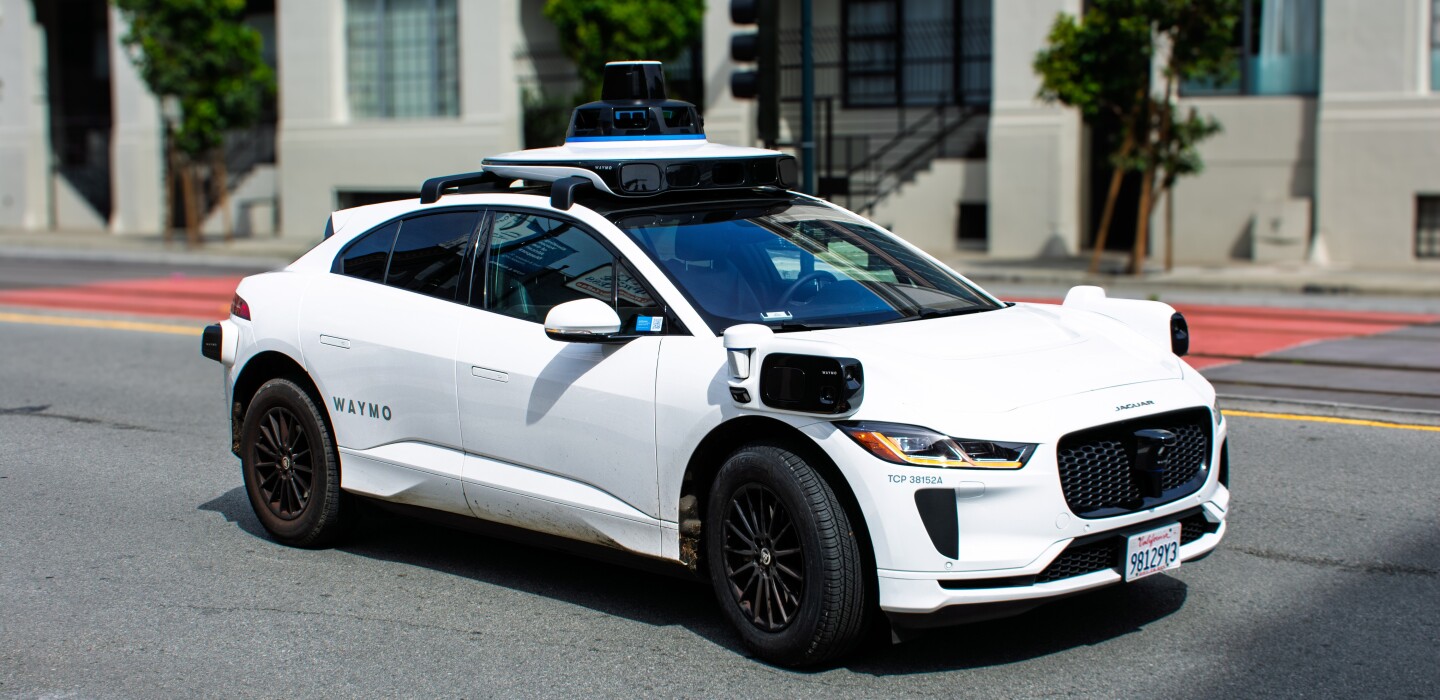
Waymo is a selfdriving technology company that operates fully autonomous ridehailing
services in several major U.S. cities. Originally Google’s selfdriving car project, it is now
a subsidiary of Alphabet focused on advancing autonomous vehicle technology. The
company makes electric robot taxis, such as the Jaguar I Pace SUVs and Zeekr cars.
These cars have cameras, sensors, and smart software. Waymo wants to make roads
safer and make it easier to get around by making self-driving cars more reliable. You
can use its robotaxi service through a mobile app that works like other ridesharing apps.
In markets that have been around for a while, rides are completely without drivers. But
in new cities, people might have to watch the system learn how to work there at first.
Waymo has driven more than 100 million miles without a driver and now gives about
250,000 rides every week.
Waymo has been under more scrutiny lately because it had to recall more than 1,200
self-driving cars after they crashed into barriers on the side of the road at low speeds. In
2024, the NHTSA began looking into the issue because they were worried about
strange driving patterns and the cars not being able to avoid things that were clearly
visible. Waymo said the problem was caused by a software bug and sent out an update
to all of its cars. However, the investigation brought up bigger questions about how
reliable self-driving systems are in complicated situations. Several serious crashes, like
the one in Tempe in 2025 that killed a motorcyclist when they hit a Waymo vehicle that
was slowing down, made these worries even worse. Another major incident occurred in
January 2025, when a speeding Tesla plowed into multiple cars at a red light—one of
them an unoccupied Waymo—resulting in a fatality and multiple injuries. A third
significant crash happened in November 2023, when a redlight runner hit a stopped
Waymo vehicle before careening into pedestrians, causing hospitalizations. Despite
these highprofile incidents, Waymo maintains that its technology remains safer than
human driving overall. The company cites an 81% reduction in injurycausing collisions
across 50 million autonomous miles as evidence of its safety performance. Waymo also
emphasizes its commitment to transparency and regulatory cooperation as it works to
improve system behavior. Beyond safety issues, the company has faced community
complaints about noise from its vehicles and charging stations, prompting efforts to
reduce disruptive sounds.
Now, noting public reception of Waymo, we also have to ask the students of our own
school, John A. Ferguson, their opinions on Waymo. When questioning Freshman
Adithya Anilkumar, he states, “Honestly, I don’t trust the idea of a car driving itself with
no human paying attention. If something goes wrong, who’s supposed to take over? It
just feels risky to get into a taxi with no driver at all.” Then, adding onto the list of
students who negatively receive, Sophomore Demian Rivas says, “I don’t like Waymo
because it seems like it would just make traffic more confusing. A robot car can’t react
the same way a real person can, especially when things get chaotic on the road. I’d
rather stick with a normal rideshare where at least someone is actually in control.” And
on the flipside, Sophomore Kevin Russo states, “I think Waymo is a cool idea because it
could make transportation safer and more convenient. If the technology keeps
improving, selfdriving taxis might reduce accidents caused by human mistakes. It
seems like a step forward for the future of travel.
Waymo’s technology represents both the promise and the uncertainty of a rapidly
changing world. While some students see autonomous vehicles as a safer, more
efficient future, others remain wary of trusting machines with something as
unpredictable as the road. These mixed reactions show that the path toward fully
driverless transportation will depend not only on technological progress, but also on
public confidence.
You may be interested

Krop V. Varsity
Julian Diaz-Gomez - Sep 18, 2026The Falcons kicked off their season in a dominant fashion, securing their 38–6 victory over theDr. Krop Lightning. The blowout win was a…

Varela v. Varsity Football Game
Jeanna Utt - Sep 16, 2026Following a strong start to the season, the Ferguson Falcons Football Team maintained their win streak after going against the Varela Vipers. On…

Ocarina of Time Remake
Fernando Venta - Sep 16, 2026It is the new hype, competing right next to GTA VI. The Legend of Zelda: Ocarina of Time has been a fan-favorite of…
Most from this category

Would Students Use the New MySpace?
Fernando Venta - Sep 10, 2026
Results of the 2026 Creative Arts Emmys
Adrian Ruiz - Sep 10, 2026
Our Picks
Would Students Use the New MySpace?
Fernando Venta - Sep 10, 2026Results of the 2026 Creative Arts Emmys
Adrian Ruiz - Sep 10, 2026
First Pep Rally
Valeria Zea - Sep 08, 2026Most Popular

Krop V. Varsity
Sep 18, 2026
Varela v. Varsity Football Game
Sep 16, 2026
Ocarina of Time Remake
Sep 16, 2026Would Students Use the New MySpace?
Sep 10, 2026