










Artemis III: NASA’s Next Leap Back to the Moon

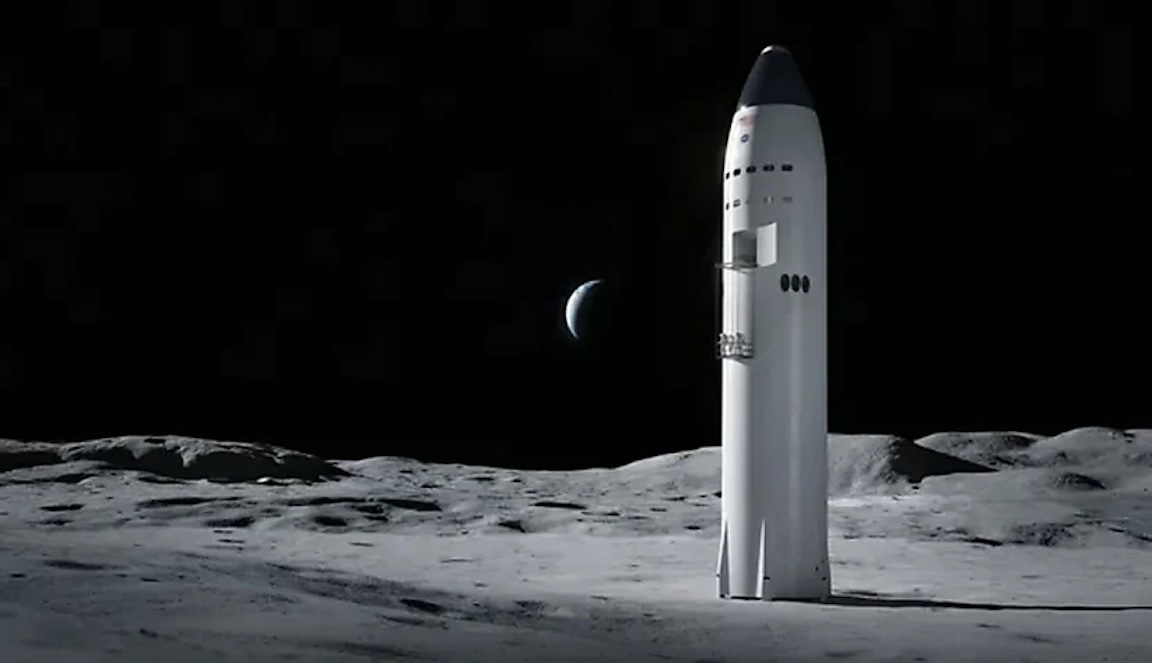
After more than 50 years, NASA is getting ready to land astronauts on the Moon again through its Artemis program. The mission that will actually land humans on the surface is called Artemis III, and it is currently planned for around 2026. This mission is important because it will use new, more advanced technology than what was used in the past. The goal is not just to visit the Moon but also to learn how humans can stay longer and use it for scientific research and future exploration.
NASA has been testing everything over time before the launch of Artemis III. The program’s first mission, Artemis, launched in 2022. It successfully orbited the Moon and safely returned the Orion spacecraft to Earth without astronauts on board. This mission demonstrated the spacecraft’s ability to withstand intense heat and radiation during deep-space travel. Additionally, it provided scientists and engineers with important data to improve the systems.
The goal of the upcoming Artemis II mission is to fly humans around the Moon without landing. Since the Apollo missions, astronauts have undertaken such long journeys. With crew aboard, Artemis II will test all safety, communication, and life support systems. This step is major because, before attempting a landing, NASA has to make sure that everything works perfectly.
In fact, Artemis III is essentially the final test before NASA begins conducting more regular and longer missions to the Moon. One of the most exciting developments is the new landing system that SpaceX is helping develop. This vehicle will transport astronauts from orbit down to the Moon’s surface and back safely. It’s better than older systems because it uses newer engines, smarter computers, and stronger materials designed to survive the harsh conditions of space. It can also carry more supplies and equipment, enabling astronauts to stay longer on the Moon and complete more experiments and missions.
Another major goal is advancing science and gaining more knowledge about the Moon. NASA plans to land near the Moon’s south pole, where scientists believe frozen water is trapped in the ground. This is important because the water could be used for drinking, generating oxygen for breathing, and converting into rocket fuel for future missions. This would make space travel more feasible, cost-effective, and efficient, as astronauts would need fewer heavy supplies from Earth.
NASA also wants to test new technologies for living and working sustainably on the Moon. They are developing habitats that can shield astronauts from harmful radiation, extreme temperatures, and dangerous space dust. Furthermore, scientists are testing nuclear power systems to give astronauts steady and reliable energy. This is important because the Moon’s night lasts about two weeks, and solar panels wouldn’t always work. Nuclear power would help astronauts have electricity, heating, and power the entire time they are there.
You may be interested

Krop V. Varsity
Julian Diaz-Gomez - Sep 18, 2026The Falcons kicked off their season in a dominant fashion, securing their 38–6 victory over theDr. Krop Lightning. The blowout win was a…

Varela v. Varsity Football Game
Jeanna Utt - Sep 16, 2026Following a strong start to the season, the Ferguson Falcons Football Team maintained their win streak after going against the Varela Vipers. On…

Ocarina of Time Remake
Fernando Venta - Sep 16, 2026It is the new hype, competing right next to GTA VI. The Legend of Zelda: Ocarina of Time has been a fan-favorite of…
Most from this category

Would Students Use the New MySpace?
Fernando Venta - Sep 10, 2026
Results of the 2026 Creative Arts Emmys
Adrian Ruiz - Sep 10, 2026
Our Picks
Would Students Use the New MySpace?
Fernando Venta - Sep 10, 2026Results of the 2026 Creative Arts Emmys
Adrian Ruiz - Sep 10, 2026
First Pep Rally
Valeria Zea - Sep 08, 2026Most Popular

Krop V. Varsity
Sep 18, 2026
Varela v. Varsity Football Game
Sep 16, 2026
Ocarina of Time Remake
Sep 16, 2026Would Students Use the New MySpace?
Sep 10, 2026